
Do you trust the Lord with your reputation?

If you don’t, you’ll work extremely hard to build a name and empire for yourself. If you do, then you will follow Him no matter what.
We’re called to trust Him with our reputations. However, as we’ll see today, we’re not the first humans to strike that and try it our way. We read in Genesis 11:1-9:
1 Now the whole world had one language and a common speech. 2 As people moved eastward, they found a plain in Shinar and settled there.
Genesis 11:1-9, New International Version
3 They said to each other, “Come, let’s make bricks and bake them thoroughly.” They used brick instead of stone, and tar for mortar. 4 Then they said, “Come, let us build ourselves a city, with a tower that reaches to the heavens, so that we may make a name for ourselves; otherwise we will be scattered over the face of the whole earth.”
5 But the Lord came down to see the city and the tower the people were building. 6 The Lord said, “If as one people speaking the same language they have begun to do this, then nothing they plan to do will be impossible for them. 7 Come, let us go down and confuse their language so they will not understand each other.”
8 So the Lord scattered them from there over all the earth, and they stopped building the city. 9 That is why it was called Babel —because there the Lord confused the language of the whole world. From there the Lord scattered them over the face of the whole earth.
Some need help with why Genesis 11 follows Genesis 10. When we look at both chapters side by side, they appear “out of order.” This impression exists only because we expect strict chronological order. None was promised, but there is a point to it being presented this way.
The “Table of Nations” of Genesis 10 would only be seen as the result of God’s punishment. This interpretation would occur if it followed today’s story. Instead, it is presented out of order. It is organized thematically here. This way, God’s blessing to have humanity be “fruitful and multiply” is front and center.
At this point, mankind had a common language and habitation. Much like when Adam and Eve were cast out (Genesis 3), this migration of mankind was “eastward.” The East side, in spatial terms, was not usually linked to blessing.
Those who were told to fill the earth after the Flood had already disobeyed God. They moved together and built a city. They settled in Shinar, which is associated with Babylonia. Again, Biblically speaking, nothing moral and praiseworthy comes from Babylonia.
When they were in this one place, they called to each other with an invitation to make themselves distinct. The descendants of Noah’s family wanted a name for themselves. They wanted their legacy to know the power of their reputation and might.
They didn’t want to be scattered. They wanted to be together. They didn’t want to do things the Lord’s way; they wanted it their way.
This wasn’t the plan the Lord had given them.
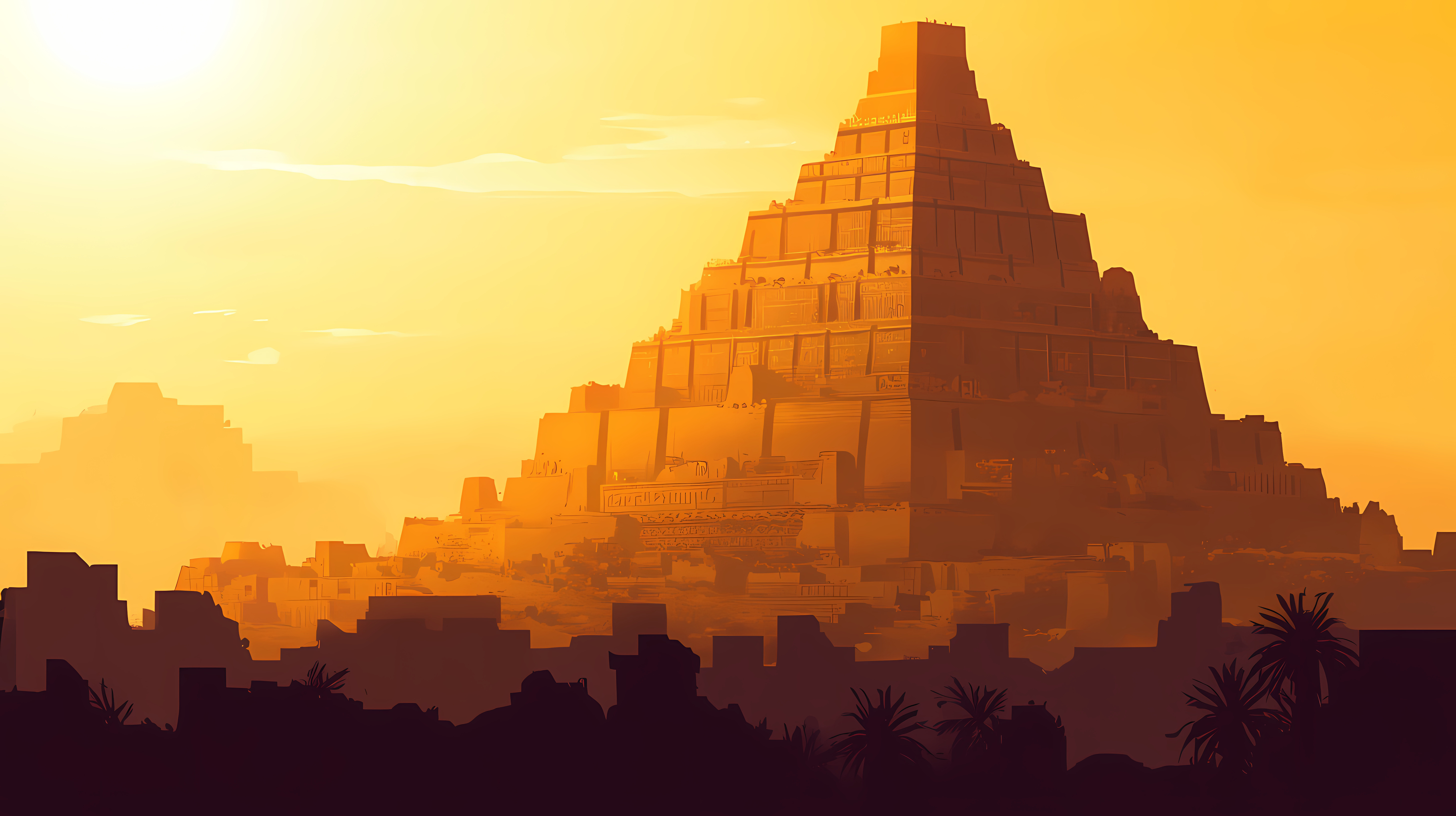
Humanity, drunk with self-importance, continued building the tower and city despite clear direction from the Lord. The tone changes in the narrative here with the phrase “but the Lord…”
Everything was about to change. This tiny tower, conceived in the minds of puny people, was a pint-sized plan. How foolish this must have looked to one who built the universe with a word. What distinction could humanity achieve compared to the unmatchable greatness of the Lord?
Was the Lord afraid of what mankind might do if left to build their puny tower? Of course not. But their single language allowed them to go further into sin.
God’s punishment of humans was as much of a preventative as a penalty. Had He allowed them to continue with one language, the depths of their defiance would have no limits. A loving God who wanted fellowship with them could not allow this to happen. They must learn to rely on Him.
So, the Lord reached down and took away the one thing that made the building possible: common language. Through God’s initiative (again), the people regained part of their divine potential to spread over the earth. Only through submission to the Lord could humans enjoy any fellowship with Him.
The Babylonians themselves translated “Babel” as “gate of the gods.” In no small amount of divine sarcasm, in Hebrew the word “Babel” sounds like “babal” which means “confused”.
Again, the Lord verified His control. Instead of making a name for themselves, God gave the project a new name. And the name would remind them of their foolishness and His power. Humanity’s desire before Babel was to MAKE a name for themselves. The irony is that God wanted to GIVE them a name. His Name.
Therefore, I ask again, do you trust the Lord with your reputation? Our ancestors at Babel didn’t. Do you?

You probably have noticed that the column at right now holds sponsors. This helps me and I earn a small commission when you purchase something by clicking through the links on my website. If you do, thanks! If you need Christian books and resources, check out Churchsource.com. When it’s time to update calendars for 2025, check out the fantastic products at Calendars.com.
 Life Meets Theology