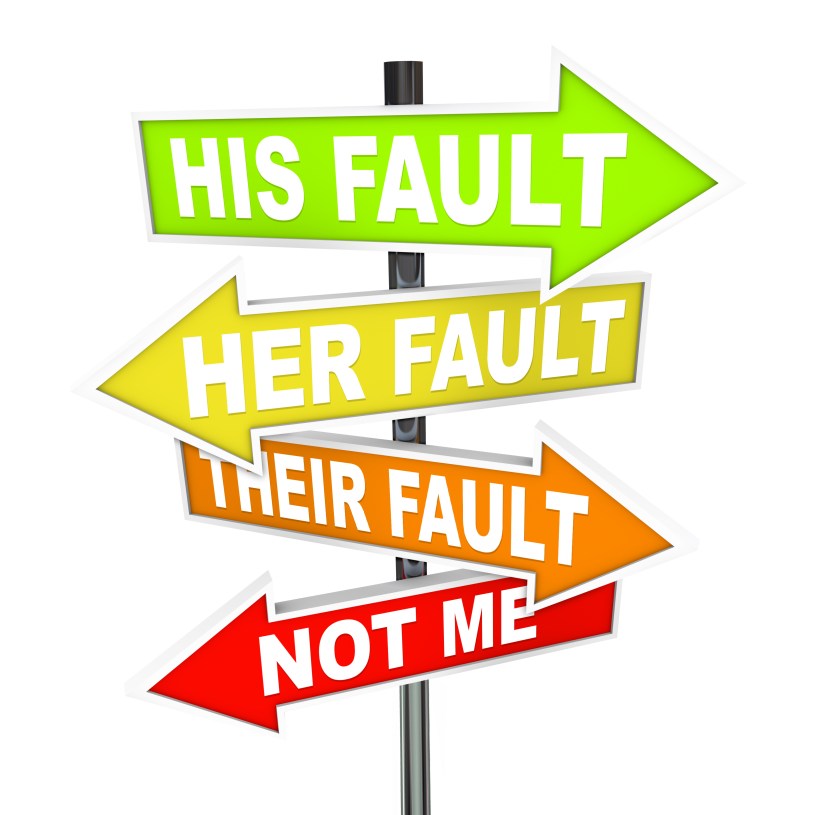
“You can fix the blame, or you can fix the problem.”

This is what a friend of mine (who is now in Heaven with Jesus) would often say. We spend so much energy blaming others and situations instead of just accepting the problem and working through it. How much more effective would we be if we spent less time fixing blame?
But as humans, we’ve been doing that for a long time. Last week, we started seeing where evil came from. Today, we’re going to start unpacking the consequences of that decision. We continue in Genesis 3:8-13.
Then the man and his wife heard the sound of the Lord God as he was walking in the garden in the cool of the day, and they hid from the Lord God among the trees of the garden. But the Lord God called to the man, “Where are you?”
Genesis 3:8-13
He answered, “I heard you in the garden, and I was afraid because I was naked; so I hid.”
And he said, “Who told you that you were naked? Have you eaten from the tree that I commanded you not to eat from?”
The man said, “The woman you put here with me—she gave me some fruit from the tree, and I ate it.”
Then the Lord God said to the woman, “What is this you have done?”
The woman said, “The serpent deceived me, and I ate.”
New International Version
As I wrote last week, the first question in the entire Bible was doubting the Lord’s motivation (Genesis 3:1). The second question is here in verse 9, and it was from the lips of the Lord. He asks, “Where are you?”
Did the Lord lose His prized creation?
Was His vision so poor He didn’t see the man and the woman hiding?
Was the Lord ignorant of the location of the humans?
No to all three.
First, the Lord was seeking the relationship He had with the man and woman. When they sinned, they broke that spiritual bond with the Lord. The Lord’s question is equally a statement of the distance between Him and the humans. He could no longer “see” them spiritually. Sin had separated them from Him.
Second, the Lord was acting as an effective parent. He was giving them a chance to confess. My mother would do this with us three boys when we were little. She’d know what we’d done but gave us a chance to confess it. Same here. The Lord is giving them space to tell Him what happened.
Third, the Lord was making an observation about their shame. Shame caused them to cover up, and now it caused them to hide. They didn’t want to see the Lord, and they didn’t want Him to see them. They hid and the Lord was pointing this out. He couldn’t “see” them because they were ashamed and hiding from Him.
Then the man tells the Lord (verse 10), “I heard you in the garden, and I was afraid because I was naked; so I hid.”
Then, we come to what I think is the saddest question in the Bible. The Lord asks, “Who told you that you were naked?” Who gave you shame? Doubt? Fear? Who told you that you needed to hide? Who told you that you had to be afraid of Me?
Again, the Lord didn’t do those things. Sin did.
Then, the blaming starts. The man blames the Lord and the woman (“The woman you put here with me…” verse 12). The Lord turns to the woman, and she points the finger at the serpent.
Everybody is pointing everywhere except where the blame actually goes: themselves.

When we sin, whose fault is it?
It is ours.
As my friend said, “Don’t fix the blame; fix the problem.”
Next week, we’ll see how the Lord fixed the problem the man and woman had gotten us into.
 Life Meets Theology