The word “grace” gets thrown around—inside and outside the church.
In a theological sense, grace is withholding what we deserve. Think of it like this: as sinners, we deserve Hell. The Lord gives us grace instead of this. At the trial of Jesus, we find another incredible example of grace.
As we reenter the “trial” of Jesus before the Roman procurator Pontius Pilate, we saw last week that the Jewish leaders claimed Jesus must die because He claimed to be the Son of God. This was blasphemy (see Leviticus 24:16).
But you know what? The Jewish leaders were correct: Jesus DID claim to be the Son of God, and He was, in fact, the Son of God. Where they were wrong was it was not Jesus blaspheming the name of God; it was the Jewish leaders.
As we continue in John 19:8-16a, we read:
When Pilate heard this, he was even more afraid, and he went back inside the palace. “Where do you come from?” he asked Jesus, but Jesus gave him no answer. “Do you refuse to speak to me?” Pilate said. “Don’t you realize I have power either to free you or to crucify you?”
John 19:8-16a, New International Version
Jesus answered, “You would have no power over me if it were not given to you from above. Therefore the one who handed me over to you is guilty of a greater sin.”
From then on, Pilate tried to set Jesus free, but the Jewish leaders kept shouting, “If you let this man go, you are no friend of Caesar. Anyone who claims to be a king opposes Caesar.”
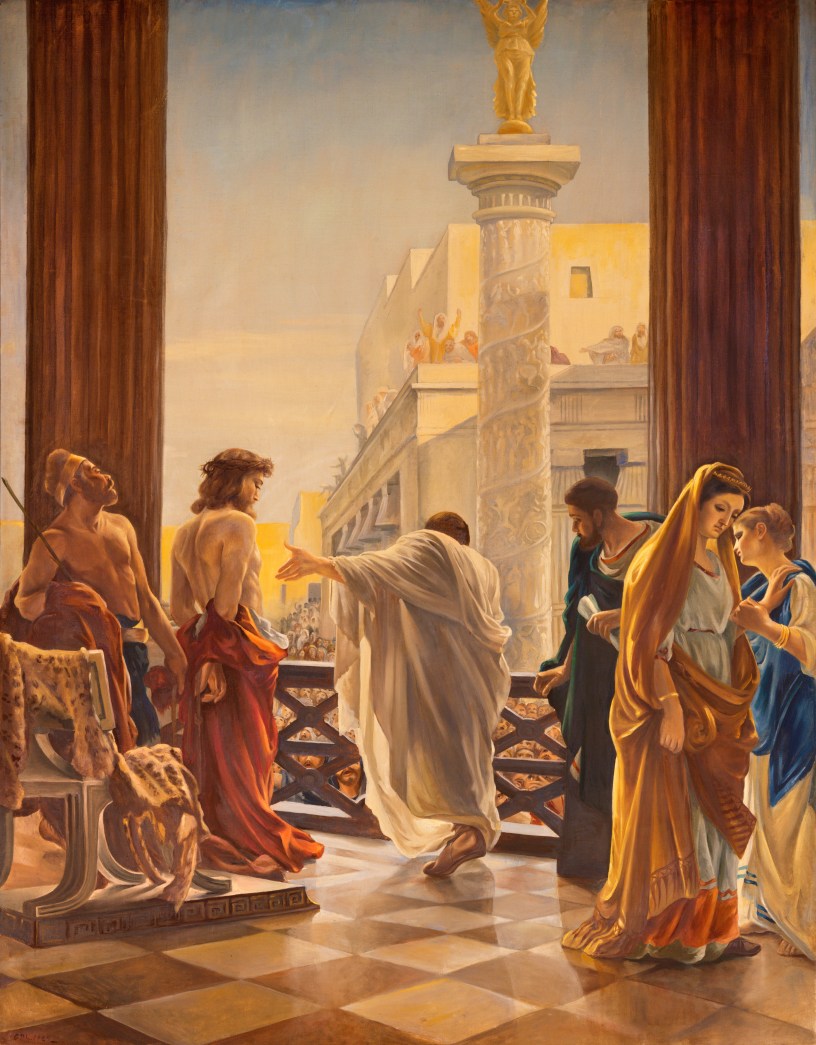
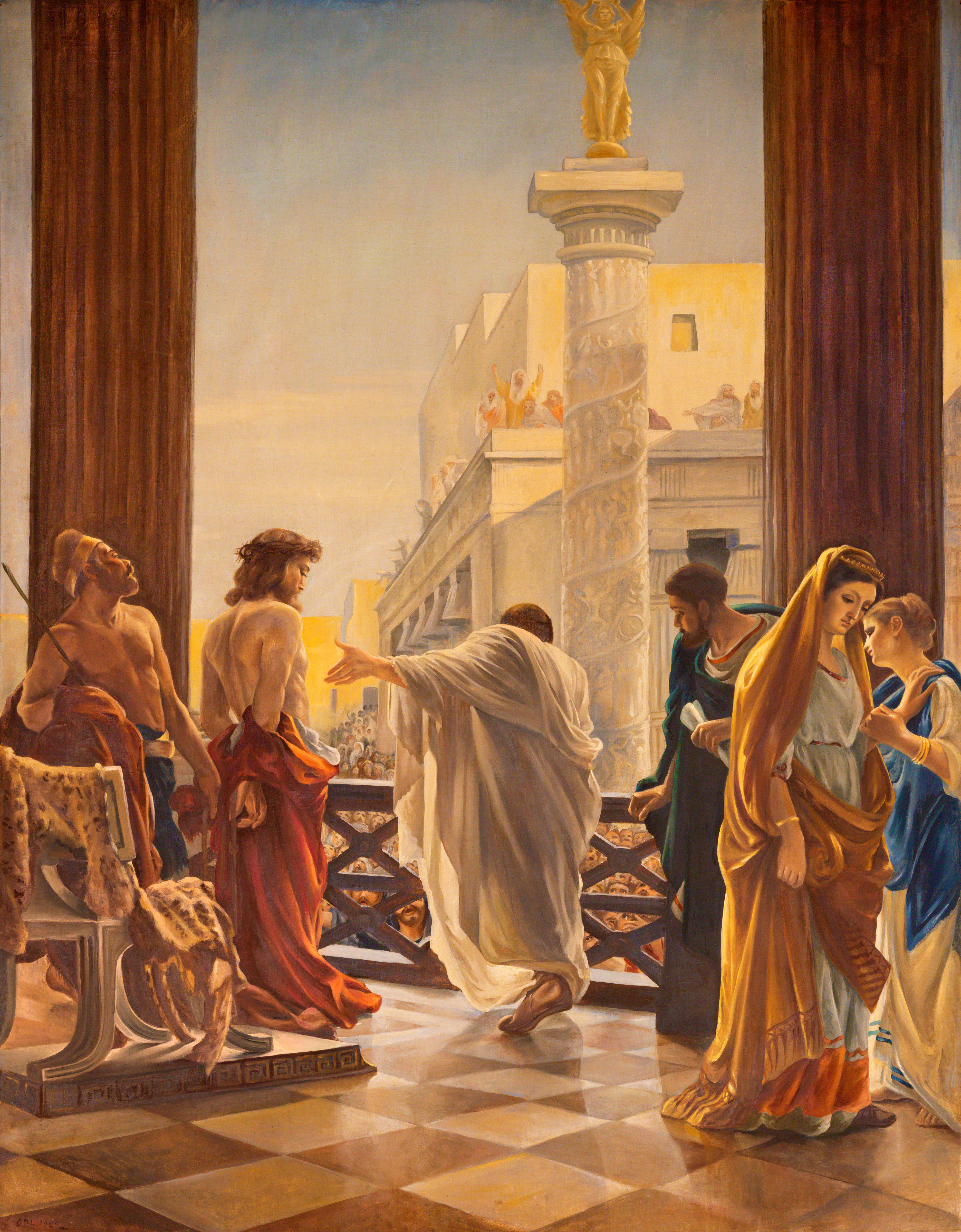
When Pilate heard this, he brought Jesus out and sat down on the judge’s seat at a place known as the Stone Pavement (which in Aramaic is Gabbatha). It was the day of Preparation of the Passover; it was about noon.
“Here is your king,” Pilate said to the Jews.
But they shouted, “Take him away! Take him away! Crucify him!”
“Shall I crucify your king?” Pilate asked.
“We have no king but Caesar,” the chief priests answered.
Finally Pilate handed him over to them to be crucified.
The charge of being the Son of God was very disturbing for Pilate. We may wonder why Pilate was afraid at all, much less, as our text says, “more afraid.”
There are two layers here. First, Pilate was afraid of not complying with the Jewish leaders. Regardless of what he wanted to do with Jesus, Pilate didn’t want a riot. The other layer is that history shows us that Roman leaders were often very superstitious. If Jesus was the Son of God, Pilate was afraid this would bring curses upon him. This made releasing Jesus even more critical!
Either way, to Pilate’s Roman ears, Jesus had done nothing to deserve death.

Back inside the praetorium, Pilate asks Jesus, “Where are you from?” But Jesus didn’t answer his question. Why should He? Pilate had already dismissed Jesus’ claims of truth. This Roman leader was more concerned with political maneuvering than justice. Jesus wasn’t going to play games with God’s plan.
The response of Jesus further demonstrates He was not a pawn in anyone’s political process. He was controlling the situation. He was not a hapless victim; He was the victor! It was not Pilate doing the judging; it was Jesus. It would be humorous if it weren’t so tragic: the prisoner was actually the judge, and the judges were, in fact, the defendants.
Bringing Jesus out, Pilate takes his seat, the bema: on it sat the official representative of the Roman Empire. Here, the judicial decision will be offered on the Messiah of Israel, the Savior of the World, the Son of God, the Word of God made flesh, Jesus Christ.
Jesus was innocent.
Pilate declared Him guilty.
And this was the way the Lord determined to provide our redemption.
The Innocent was made guilty so the guilty could be declared innocent.
No wonder we call grace “amazing.”
 Life Meets Theology